
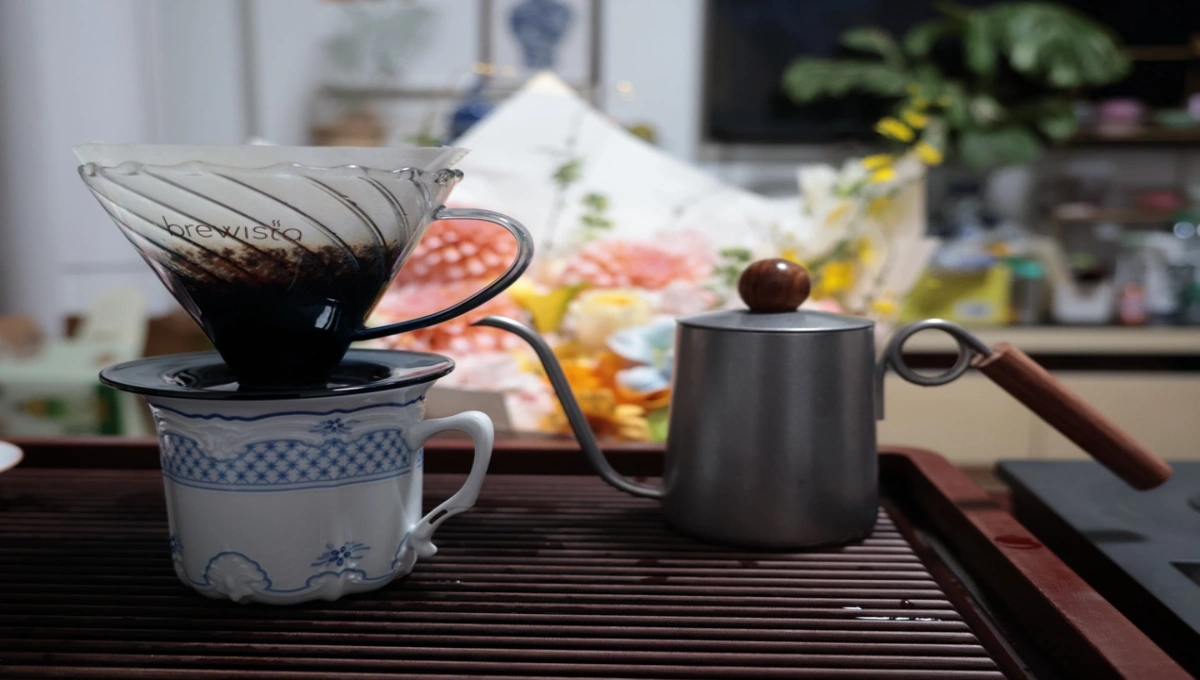
In today’s fast-paced world, almost everything runs on fast-forward—including coffee. One button press and a cup is ready. Yet the most traditional way of brewing remains pour-over coffee.
Pour-over is not a coffee variety, a roast level, or a specific drink. It is a brewing method. Freshly ground coffee sits in a dripper lined with filter paper. Hot water is poured slowly and in stages from above. As the water passes through the coffee bed, it extracts soluble flavors and aromas. The filtered coffee then drips into the server below.
It is deliberately slow. Many baristas find the method inefficient. Still, a growing number of home brewers prefer it for the clarity and control it offers.
Key Characteristics of Pour-Over Coffee
- Clean, layered flavor: The paper filter removes oils and fines, producing a bright cup that highlights origin character, acidity, and sweetness.
- Highly variable: Water temperature, brew ratio, grind size, pour speed, and staging all change the final taste. Small adjustments create noticeable differences.
- Simple equipment: A dripper, filter paper, gooseneck kettle, server, scale, grinder, and thermometer are enough. The setup is compact and easy to use at home.
- Water quality matters: Mineral content affects extraction and perceived sweetness. Soft or distilled water can taste flat; very hard water often mutes flavors. Many pour-over enthusiasts treat water as an ingredient.
How to Make Pour-Over Coffee at Home
- Fold the filter paper, rinse it with hot water, and preheat the dripper and server.
- Grind fresh beans to the appropriate size and place them in the dripper.
- Start with a small first pour (the “bloom”) to wet the grounds and release trapped gas.
- Continue with two to three slow, controlled pours, keeping the water level steady.
- Allow the coffee to finish dripping, gently swirl the server, and serve.
The entire process can be done with basic tools in a home kitchen.
Pour-over coffee is valued for its cleanliness, flexibility, and high ceiling for experimentation. It is less efficient, less forgiving, and more dependent on technique than automatic methods, and it aligns most closely with a single-origin, clarity-focused aesthetic. For those who enjoy the ritual and the ability to shape every cup, the slower pace is part of the appeal.